


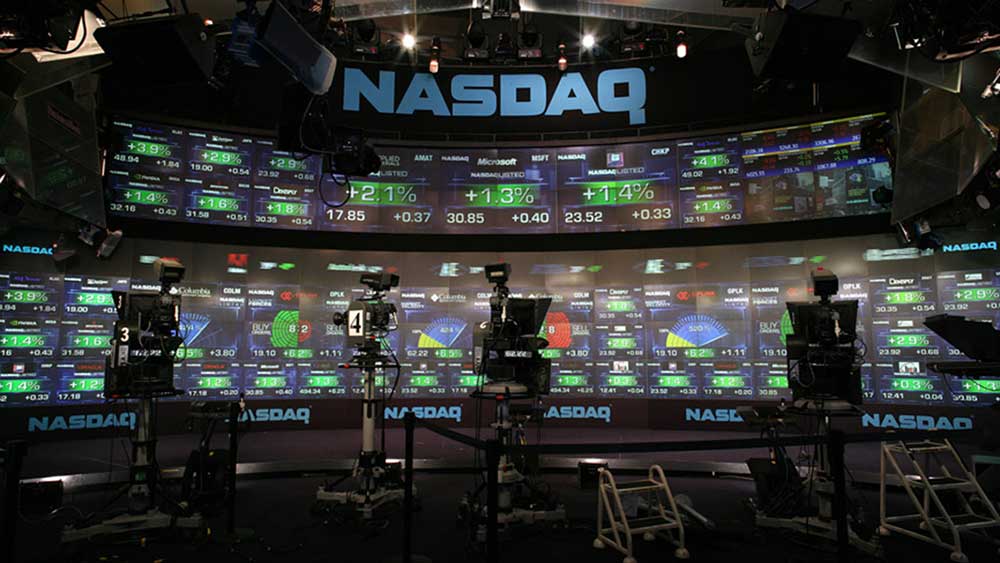
The financial world is undergoing a structural transformation as traditional market infrastructure converges with blockchain technology. One of the most significant developments in this evolution is the initiative where Nasdaq brings Wall Street order book data to blockchain through Pyth, marking a major step toward integrating institutional-grade financial data with decentralized systems.
For decades, Wall Street has operated on highly centralized market data systems, where order books, price feeds, and execution data were controlled by regulated exchanges and distributed through proprietary channels. Meanwhile, blockchain-based financial ecosystems have relied heavily on external data sources known as oracles to bring real-world information into decentralized applications.
The collaboration between Nasdaq and the Pyth Network represents a powerful bridge between these two worlds. As tokenized assets, on-chain derivatives, and algorithmic trading systems grow in complexity, access to accurate, low-latency institutional data becomes essential.
The Significance of Nasdaq’s Blockchain Data Integration
Bridging Traditional Finance and Decentralized Systems
The decision that Nasdaq brings Wall Street order book data to blockchain through Pyth represents a major milestone in the convergence of traditional finance (TradFi) and decentralized finance (DeFi). Historically, financial markets have been siloed. Wall Street institutions operate on closed systems, while blockchain networks function as open, permissionless ecosystems. This separation has created challenges for developers building decentralized financial applications that require accurate and timely market data.
By integrating Nasdaq’s order book data into blockchain systems via Pyth, these two financial worlds are now becoming interoperable. This allows decentralized applications to access institutional-grade data that was previously available only within traditional trading environments.
Why Order Book Data Matters in Financial Markets
Order book data represents the real-time list of buy and sell orders for financial assets. It is one of the most critical components of modern trading infrastructure because it determines price discovery, liquidity depth, and market behavior.
When Nasdaq brings Wall Street order book data to blockchain through Pyth, it enables decentralized systems to mirror the same level of market transparency used by institutional traders. This opens the door for more accurate pricing mechanisms in DeFi protocols, including lending platforms, derivatives exchanges, and automated trading systems.
Understanding the Role of Pyth Network in Data Distribution
What Is Pyth and How It Works
At the center of this innovation is the Pyth Network, a decentralized oracle system designed to deliver high-frequency financial data to blockchain ecosystems. Pyth aggregates data directly from first-party sources, including exchanges, trading firms, and financial institutions like Nasdaq. This data is then published on-chain, where it can be accessed by smart contracts in real time. By acting as a bridge between off-chain financial markets and on-chain applications, Pyth enables decentralized systems to operate with the same level of data reliability as traditional trading platforms.
Why Nasdaq Chose Pyth for Data Delivery
The integration where Nasdaq brings Wall Street order book data to blockchain through Pyth is significant because it reflects a shift toward institutional trust in decentralized infrastructure. Pyth is designed for high-frequency, low-latency financial data distribution, making it suitable for complex trading environments that require precision and speed. Nasdaq’s involvement adds credibility to the blockchain data ecosystem, signaling that decentralized oracle networks are capable of handling institutional-level financial information.
The Impact on Decentralized Finance (DeFi)
Enhancing Price Accuracy and Market Efficiency
One of the most immediate benefits of Nasdaq bringing Wall Street order book data to blockchain through Pyth is improved price accuracy in DeFi markets. Many DeFi protocols rely on external price feeds that may lag behind real-world market conditions. This can lead to inefficiencies such as arbitrage opportunities, liquidation risks, and pricing discrepancies. With direct access to Nasdaq’s order book data, decentralized applications can achieve more accurate and responsive pricing models, reducing systemic inefficiencies across the ecosystem.
Strengthening DeFi Derivatives and Trading Platforms
Advanced DeFi platforms that offer on-chain derivatives trading, perpetual contracts, and synthetic assets depend heavily on reliable market data. By incorporating Nasdaq’s order book information, these platforms can simulate institutional-grade trading environments directly on blockchain networks. This enhances liquidity management, improves risk modeling, and supports more sophisticated financial products within decentralized ecosystems.
Institutional Adoption and Market Validation
Growing Confidence in Blockchain Infrastructure
The move where Nasdaq brings Wall Street order book data to blockchain through Pyth also reflects increasing institutional confidence in blockchain infrastructure. For years, many traditional financial institutions remained cautious about engaging with decentralized systems due to concerns over security, scalability, and regulatory uncertainty. However, the integration of real-time market data into blockchain networks demonstrates that these systems are maturing into viable financial infrastructure components.
The Role of Data Integrity in Institutional Finance
Institutions prioritize data integrity above almost everything else. Financial decisions worth billions of dollars depend on accurate, tamper-proof information. By using blockchain-based oracle systems like Pyth, Nasdaq ensures that its data remains secure, verifiable, and resistant to manipulation. This strengthens the credibility of blockchain networks as reliable financial infrastructure capable of supporting institutional-grade applications. How Blockchain Enhances Market Transparency
Real-Time Data Accessibility for Smart Contracts
One of the most transformative aspects of Nasdaq bringing Wall Street order book data to blockchain through Pyth is the ability for smart contracts to access real-time financial data.
Smart contracts are self-executing programs that operate on blockchain networks. However, they require external data inputs—known as oracle data feeds—to function effectively in real-world financial applications. With Nasdaq’s order book data available on-chain, smart contracts can execute trades, adjust collateral positions, and manage risk based on live market conditions. Reducing Market Information Asymmetry
Traditional financial markets often suffer from information asymmetry, where certain participants have faster or more detailed access to market data than others. By publishing order book data on blockchain, Nasdaq helps reduce this imbalance. All participants in decentralized markets can access the same high-quality information simultaneously, promoting fairness and transparency. This democratization of financial data is one of the core principles driving the adoption of blockchain technology.
The Future of Tokenized Financial Markets
Enabling Real-World Asset Tokenization
The integration of Nasdaq data into blockchain ecosystems also supports the growth of tokenized financial assets. Tokenization refers to the process of representing real-world assets—such as stocks, bonds, and commodities—on blockchain networks. Accurate order book data is essential for pricing these tokenized assets correctly. With Nasdaq contributing directly to on-chain data infrastructure, the foundation for large-scale tokenized markets becomes significantly stronger.
Expanding Institutional-Grade DeFi Ecosystems
As Nasdaq brings Wall Street order book data to blockchain through Pyth, it becomes possible to build DeFi ecosystems that mirror traditional financial markets in complexity and reliability. These systems could include tokenized equities, on-chain ETFs, decentralized hedge funds, and algorithmic trading platforms that rely on real-time institutional data. This convergence marks the beginning of a hybrid financial system that blends the strengths of centralized and decentralized models.
Challenges and Risks in On-Chain Data Integration
Data Latency and Scalability Concerns
Despite its advantages, integrating high-frequency financial data into blockchain systems presents challenges. One of the key issues is latency. Financial markets operate in milliseconds, while blockchain networks often experience block confirmation delays. Ensuring that Nasdaq order book data remains timely and accurate on-chain requires advanced optimization and infrastructure scaling.
Security and Oracle Reliability
Another concern is the security of oracle systems like Pyth. Since decentralized applications rely on external data sources, any compromise in data integrity could impact entire financial ecosystems. Robust cryptographic verification, redundancy mechanisms, and institutional partnerships help mitigate these risks, but they remain an important consideration.
The Broader Impact on Global Financial Infrastructure
Convergence of TradFi and DeFi Systems
The initiative where Nasdaq brings Wall Street order book data to blockchain through Pyth is part of a broader global trend toward financial convergence. Traditional finance and decentralized finance are no longer separate ecosystems. Instead, they are increasingly interconnected through shared infrastructure, data standards, and interoperable systems. This convergence is expected to redefine how financial markets operate over the next decade.
Accelerating Blockchain Adoption in Capital Markets
As more institutions adopt blockchain-based data systems, the technology becomes increasingly embedded in global capital markets. Nasdaq’s involvement serves as a powerful signal that blockchain is not just a speculative technology but a foundational layer for future financial infrastructure. This could accelerate adoption across exchanges, asset managers, and fintech platforms worldwide.
Conclusion
The development where Nasdaq brings Wall Street order book data to blockchain through Pyth represents a pivotal moment in the evolution of global financial markets. By connecting institutional-grade data infrastructure with decentralized blockchain systems, this integration bridges a long-standing gap between traditional finance and Web3 innovation.
The implications are far-reaching. From improving DeFi pricing accuracy and enabling tokenized assets to enhancing transparency and reducing market inefficiencies, this collaboration lays the groundwork for a more interconnected and efficient financial ecosystem.
While challenges such as latency, scalability, and security remain, the direction is clear: financial markets are steadily moving toward a hybrid model where blockchain technology and institutional finance coexist and reinforce each other.Nasdaq’s participation in this transformation signals a new era where real-time, verifiable financial data becomes a shared global resource, accessible across both centralized and decentralized systems.
