



Bitcoin (BTC) stands at a pivotal moment in its price trajectory, hovering near a critical resistance zone that will determine whether the leading cryptocurrency continues its bull momentum or faces a significant pullback. As of mid-2026, the world’s most valuable digital asset is testing levels that have historically served as both strong support and formidable resistance, creating a scenario where BTC buyers face a genuine fork in the road. The cryptocurrency market remains notoriously volatile, and Bitcoin price action at these junctures typically signals larger trends that reverberate throughout the entire digital assets ecosystem.
The current price consolidation between the $60,000 level and the $64,000 threshold represents more than just another trading range. This critical zone encompasses psychological barriers, technical support levels, and resistance points that have shaped Bitcoin’s narrative multiple times before. Understanding what’s happening at these price points requires a deep dive into technical analysis, market sentiment, and the broader macroeconomic factors influencing cryptocurrency markets. For traders, investors, and those simply curious about BTC’s next move, this analysis explores the forces at play and what realistic scenarios lie ahead.
Bitcoin’s Current Price Structure
Bitcoin’s recent price movements have created what technical analysts call a consolidation pattern, where the cryptocurrency oscillates within a defined range rather than trending decisively in either direction. This consolidation phase between $60,000 support and $64,000 resistance is not unusual in mature cryptocurrency markets; in fact, such periods often precede significant directional moves.
The $60K support level has proven psychologically and technically significant for BTC traders throughout 2026. This round-number barrier has attracted substantial buying interest whenever prices approached it, suggesting that large institutional investors and retail traders view this level as a potential floor. Historically, major support levels like $60,000 tend to strengthen with each successful test, as more traders establish buy positions at these price points. The psychology behind round numbers cannot be understated in financial markets—traders worldwide view $60,000 as a natural entry point, creating self-fulfilling prophecies where buying pressure emerges automatically.
Conversely, the $64,000 resistance level has proven more challenging for Bitcoin buyers to overcome. This level has rejected upward movements on multiple occasions, suggesting that sellers have accumulated inventory at this price or that profit-taking has intensified as BTC approaches it. The resistance at $64,000 represents a barrier that must be convincingly broken for Bitcoin to establish a new higher trading range and signal strength to the broader market.
Technical Analysis: Reading the Price Action Signals
Key Resistance and Support Levels
The technical framework surrounding Bitcoin’s current price action reveals a complex interplay of support and resistance that traders must navigate carefully. The $60,000 support zone represents the lower boundary of our critical consolidation range, and breaching it would likely trigger a cascade of sell orders as technical traders activate stop losses below this psychological barrier.
Bitcoin technical analysis suggests that the $60,000 level sits atop several layers of support, including both psychological round-number buying and actual chart-based support derived from previous price action. When price consolidates above critical support like this, it typically indicates that buyers remain engaged and committed to defending that level. The buying pressure at $60,000 has historically been strong enough to reverse intraday moves, suggesting that breaking below this level convincingly would require substantial bearish catalysts.
Moving upward, the $64,000 resistance zone presents a more formidable challenge to BTC’s upside potential. This level has been tested multiple times, and each rejection has reinforced its status as a ceiling. Cryptocurrency traders recognize that breaking above $64,000 would require convincing bullish momentum and likely sustained institutional buying. The significance of this resistance point lies not just in the technical level itself, but in what breaking above it would signal to the broader market—that Bitcoin buyers are willing to accumulate at higher prices and that the bull case remains intact.
Volume and Momentum Indicators
Bitcoin’s price action at critical zones becomes significantly more meaningful when analyzed alongside volume data and momentum indicators. Currently, the consolidation pattern between $60,000 and $64,000 shows relatively modest volume, suggesting that neither buyers nor sellers are completely committed to a directional break. This kind of low-volume consolidation typically precedes explosive moves in either direction, as the eventual winning side tends to attack with conviction.
The momentum indicators tracking BTC show mixed signals that reflect the indecision in the marketplace. Some oscillators suggest oversold conditions that could attract buying, while others indicate weakening bullish momentum that might lead to further consolidation or mild decline. This balanced state of affairs highlights why Bitcoin remains at a true critical juncture—technical conditions don’t provide an overwhelmingly compelling case for either direction.
The Case for Bitcoin Testing $64,000
Bullish Catalysts Supporting Higher Prices
Several factors support the bullish case for Bitcoin breaking through $64,000 resistance and establishing higher price targets. Institutional adoption continues to expand, with more cryptocurrency funds and traditional asset managers allocating capital to BTC positions. The narrative around Bitcoin as digital gold and a hedge against inflation remains compelling, particularly in macroeconomic environments characterized by monetary expansion and currency uncertainty.
Bitcoin buyers have demonstrated remarkable resilience, repeatedly defending lower support levels and accumulating on weakness. This behavior suggests conviction among significant stakeholders about Bitcoin’s long-term value proposition. Additionally, on-chain metrics show substantial holdings among long-term investors, implying that opportunistic sellers may be limited at current price levels.
The regulatory environment, while still evolving, has gradually become more favorable toward cryptocurrency markets. Regulatory clarity in major jurisdictions tends to reduce uncertainty premiums and allows institutional investors to participate more actively in Bitcoin markets. If this favorable regulatory momentum continues, it could provide the catalyst needed for BTC to break through $64,000 resistance and target higher levels.
Historical Precedent for Range Breakouts
Bitcoin’s price history demonstrates that consolidation patterns often resolve decisively, particularly when breaking above resistance levels. Previous instances where BTC has consolidated and then broken above critical resistance zones have typically been followed by substantial moves, with Bitcoin quickly establishing new support levels at the former resistance and proceeding higher.
The psychological importance of breaking through $64,000 cannot be understated. Once this level yields to sustained buying pressure, technical traders implementing breakout strategies will likely add to longs, creating a self-reinforcing cycle of upward price movement. Bitcoin moving above $64,000 would signal to the broader market that the recent weakness was merely consolidation, not the beginning of a bear market.
The Bearish Case: Risk of Testing $60,000 Support
Concerns About Weakening Momentum
The bearish scenario for Bitcoin centers on the possibility that current BTC consolidation represents exhaustion rather than coiling strength. If Bitcoin buyers cannot summon sufficient demand to break through $64,000 resistance, it may indicate that conviction about higher price targets is waning. Extended periods of sideways consolidation without breakout can drain trader enthusiasm and set the stage for test of support levels.
Cryptocurrency markets have demonstrated their vulnerability to macroeconomic shifts, and any deterioration in broader economic conditions could quickly reverse the modest bullish sentiment supporting BTC at current levels. Bitcoin’s correlation with risk assets like equities remains pronounced during risk-off periods, meaning that stock market weakness could easily cascade into selling pressure on BTC.
Technical Warning Signs
Several technical patterns could foreshadow a move toward the $60,000 support zone. A confirmed breakdown below key moving averages or loss of support from previously defined support levels could trigger a bearish cascade as technical traders activate sell signals. The longer Bitcoin remains trapped in consolidation without breaking above $64,000, the more likely it becomes that sellers will aggressively target lower prices.
If $60,000 support is decisively broken, the next meaningful level of support may not emerge until substantially lower prices. Breaking this psychological barrier would likely accelerate selling, as traders who accumulated positions at $60,000 believing it was strong support would face forced liquidations. Cryptocurrency traders should recognize that loss of the $60,000 support level represents a genuine breakdown with significant downside implications.
Market Sentiment and Investor Behavior
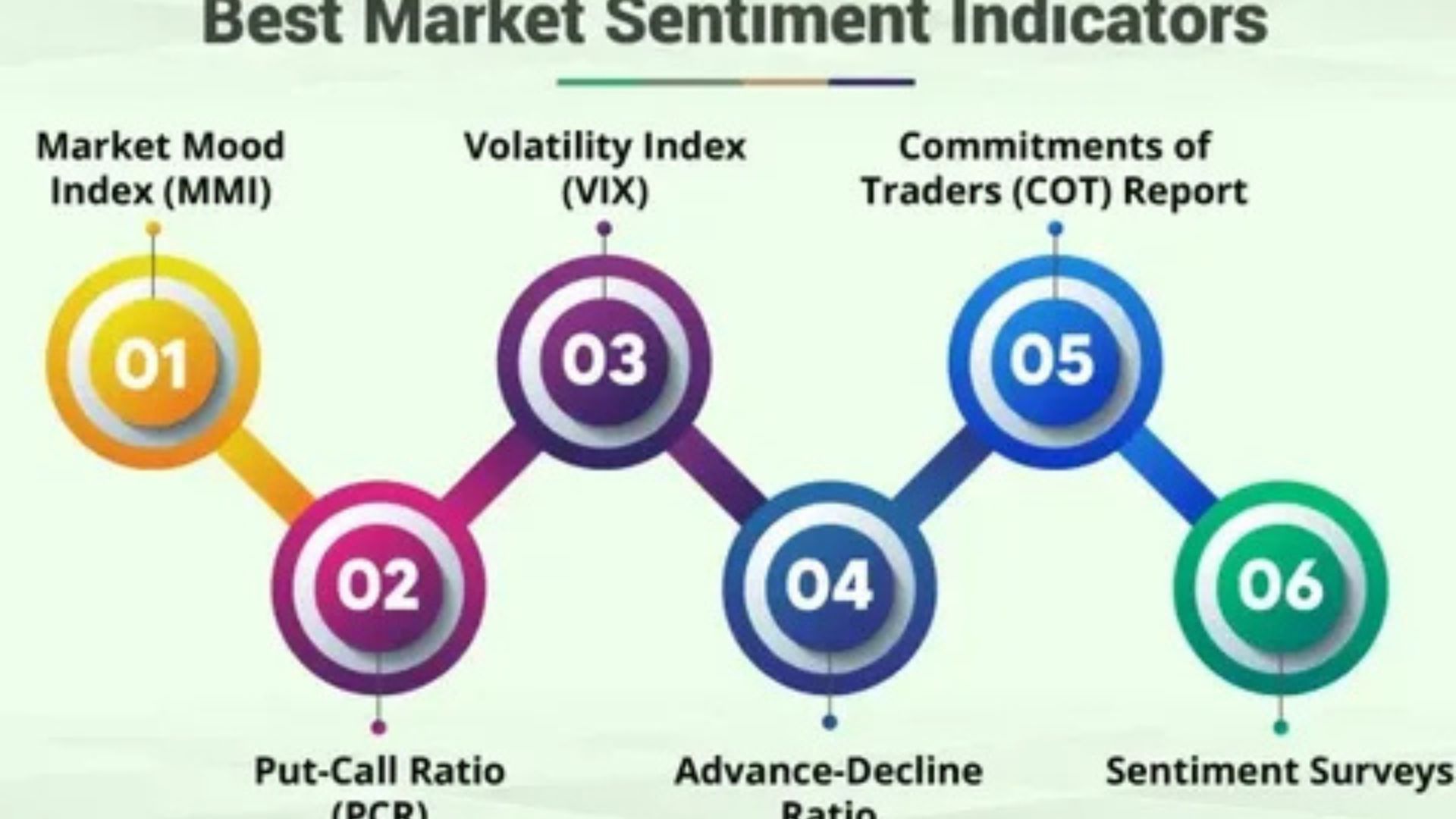
Institutional vs. Retail Positioning
Understanding the positioning of different investor categories provides critical insight into Bitcoin’s likely next move. Institutional investors and cryptocurrency funds tend to trade with longer time horizons and are less prone to panic selling at intraday price swings. Their demonstrated accumulation at current levels suggests confidence in Bitcoin’s medium to long-term prospects.
Retail traders and speculative participants, conversely, tend to respond more emotionally to price action, and their behavior often follows technical indicators and sentiment extremes. Currently, retail sentiment toward Bitcoin appears cautiously optimistic but not euphoric, suggesting that a significant capitulation event might still be possible if BTC breaks below $60,000.
On-Chain Metrics and Network Health
Bitcoin’s network fundamentals remain robust, with transaction volumes and address activity showing continued engagement. Large holders, often termed “**whale investors**” or “**diamond hands**” in community parlance, have generally increased their holdings rather than distributed them, a behavior that typically precedes bull markets rather than bear markets.
The Funding Rates in Bitcoin futures markets remain relatively balanced, suggesting that leveraged traders haven’t become excessively bullish or bearish. This neutral positioning is consistent with a market at a genuine crossroads—insufficient consensus either way to drive a decisive move in either direction.
What Could Trigger a Move to $64,000
Positive Catalysts for Upside Breakout
A convincing move above $64,000 would likely require either positive macroeconomic news, continued institutional capital inflows, or positive regulatory developments. Bitcoin has historically shown sensitivity to central bank policy, particularly regarding interest rate expectations and monetary expansion. If expectations shift toward extended periods of low rates, BTC typically benefits as investors seek alternatives to low-yielding bonds.
Adoption milestones also matter significantly—announcements from major corporations adopting Bitcoin as treasury reserves or integration of BTC into mainstream financial products could shift sentiment decisively. The approval of new Bitcoin exchange-traded products or expansion of cryptocurrency services in major economies could provide the catalyst needed for BTC to break through $64,000 resistance with conviction.
Technical Confirmation Signals
A move above $64,000 becomes significantly more likely if accompanied by strong volume confirmation. A breakout on heavy volume signals that multiple participants are committed to higher prices, whereas a breakout on light volume represents a potential false break that could reverse quickly. Bitcoin traders should watch for volume confirmation as a key signal of breakout validity.
Additionally, breaking above $64,000 combined with confirming signals from momentum indicators and relative strength would strengthen the case for a sustained move higher. Multiple technical confirmations working in concert provide higher probability signals than isolated technical breakouts.
Scenarios Suggesting a Test of $60,000
Economic and Macroeconomic Headwinds
A deterioration in economic data or escalation of geopolitical tensions could quickly redirect Bitcoin back toward $60,000 support. Risk-off environments have historically pressured cryptocurrency prices, and BTC would not be immune from broad-based risk asset selloffs. Should major economies slip into recession, the impetus to test support levels would increase significantly. Inflation concerns, paradoxically, could also pressure Bitcoin if they trigger aggressive central bank tightening. While mild inflation typically supports the Bitcoin narrative as an inflation hedge, rapid inflation triggering restrictive monetary policy could force sell-offs across risk assets, including BTC.
Technical Breakdown Triggers
Loss of support at intermediate levels above $60,000 would create a technical breakdown scenario where the next level of support would be significantly lower. Bitcoin traders using technical analysis would interpret such a breakdown as a signal to liquidate holdings and shift to cash, creating self-fulfilling downside moves. The $60,000 level, despite its psychological significance, is not infinitely strong. Sustained selling pressure with volume could breach this support, triggering a cascade of liquidations as traders who accumulated at $60,000 believing it to be strong support would face losses.
Investment Considerations and Risk Management
Position Sizing in Uncertain Markets
The current critical juncture for Bitcoin suggests that traders and investors should approach BTC positioning with appropriate caution. Position sizing becomes crucial when facing binary outcomes—a move to $64,000 or a test of $60,000 represents material percentage moves for BTC holders.
Conservative investors might reduce exposure near resistance levels and rebuild positions only if Bitcoin proves it can sustain moves above $64,000. More aggressive investors comfortable with volatility might maintain larger positions, accepting the drawdown risk inherent in testing support levels in exchange for upside capture if BTC breaks higher.
Setting Alerts and Stop Levels
Disciplined risk management requires establishing clear levels where decisions will be made rather than reacting emotionally to price action. Setting alerts at $64,000 and above helps capture upside moves, while establishing stops below $60,000 protects against sustained breakdown scenarios.Bitcoin traders should define in advance what technical signals would convince them to add to positions versus reduce exposure. Clear rules established before emotional price swings occur tend to lead to better decision-making than reactive trading.
Conclusion
Bitcoin (BTC) currently tests a genuinely critical zone where $64,000 resistance and $60,000 support define near-term possibilities. The cryptocurrency stands at a crossroads reflecting deeper questions about institutional adoption momentum, macroeconomic conditions, and market sentiment toward risk assets.
A break above $64,000 would signal renewed bullish conviction and likely catalyze moves toward more substantial price targets, while a breakdown below $60,000 would suggest that consolidation has exhausted buyers and that bearish forces control near-term price discovery. Neither outcome is assured, and the genuine balance between these scenarios explains why Bitcoin trades within this range rather than decisively moving in either direction.
For BTC investors and traders, this period demands discipline, clear risk management, and careful monitoring of the technical and fundamental signals that will eventually resolve this indecision. The Bitcoin price action over the coming weeks will likely provide clarity, but until then, recognizing the critical nature of current levels remains paramount to sound decision-making.
