



The financial markets are experiencing an interesting divergence in August 2026. While global stocks have reached unprecedented record highs, signaling investor confidence and economic optimism, Bitcoin remains stubbornly stagnant below the $64,300 mark—a level the world’s leading cryptocurrency has unsuccessfully breached four times in recent weeks. This disconnect between traditional equity markets and digital assets raises critical questions about cryptocurrency market dynamics, investor sentiment, and what the future holds for Bitcoin price prediction in the coming months. The contrast is stark and deserves careful examination. When stock market indices are breaking through resistance levels and setting new all-time highs, you would typically expect Bitcoin, often referred to as “digital gold” and a hedge against traditional market instability, to participate in this broader rally. Instead, Bitcoin price action suggests something more nuanced is happening beneath the surface—a battle between bullish momentum and bearish resistance that has left traders and investors confused about the near-term trajectory of the crypto market.
This article explores the intricate relationship between global equities and Bitcoin, examines why BTC is facing headwinds at the $64,300 resistance level, and provides informed analysis on what Bitcoin price predictions might look like as we move forward. Understanding these dynamics is crucial for anyone with exposure to both traditional and digital assets.
The Current Market Landscape: Stock Highs vs Bitcoin Stagnation
Global stock markets have celebrated remarkable gains throughout 2026, with major indices consistently pushing higher. The S&P 500, NASDAQ, and international exchanges have seen sustained buying pressure driven by factors including strong corporate earnings, technological innovation, and monetary policy expectations. This bullish sentiment in traditional finance represents a vote of confidence in the global economy and corporate profitability. However, Bitcoin’s price behavior tells a different story. The cryptocurrency market, which has historically moved in cycles driven by adoption narratives, regulatory developments, and macroeconomic factors, appears decoupled from the strength in equities. While stocks soar, Bitcoin has struggled to maintain consistent momentum above $64,300, failing to break through this critical resistance level on four separate occasions.
This divergence raises several important considerations. First, it suggests that the risk-on sentiment driving stock prices higher may not be translating uniformly across all asset classes. Second, it indicates that Bitcoin investors and stock market participants may be responding to different signals or have varying risk appetites at current price levels. Third, it highlights the unique challenges facing cryptocurrency investments in a landscape where traditional assets are performing exceptionally well. The relationship between Bitcoin and equities has evolved significantly since the early days of cryptocurrency. Once considered completely uncorrelated, these assets now show periods of correlation, particularly during extreme market stress or when macroeconomic factors dominate investor decision-making. The current market setup presents a fascinating case study in how differently these asset classes respond to similar economic conditions.
Bitcoin’s Resistance at $64,300: Technical Analysis Perspective
Technical analysis provides valuable insights into why Bitcoin has struggled at the $64,300 level. This price point has emerged as a significant resistance zone, a level where sellers have repeatedly stepped in to prevent the price from advancing further. When an asset encounters resistance multiple times, it becomes psychologically important to both buyers and sellers in the market. The $64,300 resistance likely represents a confluence of technical factors. First, it may align with previous highs or significant trading volume nodes where investors from earlier periods have their positions. These traders, having purchased Bitcoin near these levels, are eager to exit their positions once the price returns to their entry points, creating automatic selling pressure. This phenomenon, known as “resistance from supply,” is a foundational principle in technical trading.
Second, the repeated rejection of Bitcoin at this level may be attributable to bearish technical indicators that have developed on longer timeframes. When momentum indicators like the Relative Strength Index (RSI) show overbought conditions, traders often interpret this as a signal to take profits, even if the broader trend remains positive. This profit-taking activity can intensify selling pressure at key resistance levels. Additionally, candlestick patterns and chart formations have likely played a role. If Bitcoin has formed bearish patterns like double tops or head-and-shoulders formations at the $64,300 level, these carry significant psychological weight in trading communities. Traders who study chart patterns may preemptively sell or avoid buying near these levels, effectively suppressing price appreciation.
The technical picture becomes even more complex when you consider various timeframes. While the daily chart may show resistance, intermediate timeframes (weekly or monthly) might suggest that this consolidation phase is natural and healthy within a larger uptrend. Understanding which timeframe dominates investor decision-making is crucial to predicting when Bitcoin will finally break through this resistance level.
The Role of Macroeconomic Factors in Bitcoin Price Dynamics
Macroeconomic conditions significantly influence Bitcoin price movements, though the relationship is often misunderstood. Many investors believe that cryptocurrency should surge when traditional markets struggle, positioning Bitcoin as an insurance policy against economic turbulence. While this narrative has merit in extreme scenarios, the reality is more nuanced. In a scenario where stock markets are hitting record highs—as they currently are—some investors may see less urgency to seek refuge in alternative assets like Bitcoin. When confidence in traditional markets is high, capital flows toward equities, real estate, and other traditional vehicles rather than speculative digital currencies. This simple capital allocation principle helps explain why Bitcoin’s price may struggle even as global stocks achieve new milestones.
Moreover, interest rates and monetary policy expectations play crucial roles. If central banks signal that they intend to maintain higher interest rates for longer, bonds become more attractive relative to non-yielding assets like Bitcoin. Investors can earn safe returns from government bonds without taking on the volatility associated with cryptocurrency. This dynamic has been particularly relevant throughout 2026, as investors reassess their portfolio allocation strategies. Inflation expectations also matter significantly. When inflation appears to be cooling and under control, the argument for holding Bitcoin as an inflation hedge weakens. If investors believe that real returns are available through traditional financial instruments without the volatility of crypto, they naturally gravitate toward these safer options. The current market environment, with stock indices at record levels, may suggest to many investors that economic fundamentals are sound and inflation is manageable.
Additionally, regulatory uncertainty continues to weigh on Bitcoin sentiment. Any announcements regarding crypto regulation, taxation, or government intervention can create sharp price corrections. While the regulatory landscape has become clearer since the early years of cryptocurrency, lingering concerns about potential restrictive policies can create a ceiling on Bitcoin price appreciation.
Bitcoin Price Prediction: What Analysts and Experts Expect
Bitcoin price prediction for the remainder of 2026 varies considerably among analysts, reflecting the genuine uncertainty in forecasting cryptocurrency movements. However, several consensus themes have emerged among serious market analysts. Many crypto experts maintain that the current consolidation around $64,300 represents an accumulation phase rather than a fundamental weakness in Bitcoin’s longer-term prospects. This perspective suggests that after this sideways trading period, we could see acceleration to the upside, potentially targeting $75,000 to $85,000 within several months. These bullish forecasters often point to increasing institutional adoption, growing recognition of Bitcoin as a legitimate asset class, and the fundamental value proposition of decentralized currencies as supporting factors.
Conversely, more conservative analysts suggest that Bitcoin could remain range-bound between $60,000 and $65,000 for an extended period. This view acknowledges that despite long-term promise, cryptocurrency faces near-term headwinds from macroeconomic conditions, regulatory concerns, and the simple fact that capital is finding better opportunities in equities that generate earnings and dividends. Some technical analysts focus on specific price levels as key areas to monitor. Support levels around $60,000 represent areas where significant accumulation has historically occurred, suggesting that Bitcoin has substantial buying interest at these prices. Conversely, if resistance at $64,300 finally breaks, the next target zones might exist at $67,000, $70,000, and beyond.
Long-term Bitcoin price predictions tend to be more optimistic. Many analysts believe that over a 3–5 year timeframe, Bitcoin could reach five-figure valuations as adoption increases, cryptocurrency infrastructure matures, and institutional investors increase their allocations. However, the path to these targets is rarely linear, and near-term volatility should be expected. The critical insight is that Bitcoin price predictions must account for both technical factors (like the resistance at $64,300) and fundamental factors (like macroeconomic conditions and regulatory environment). Neither alone provides a complete picture of where cryptocurrency prices are headed.
Comparing Bitcoin Performance to Traditional Markets
The stark contrast between stock market performance and Bitcoin price action offers valuable lessons about asset allocation and diversification. While global stocks are achieving record highs, Bitcoin is struggling to maintain momentum—a situation that suggests these assets are responding to different market signals. Traditional equities derive value from underlying business fundamentals: earnings, revenue growth, cash flows, and competitive advantages. When companies perform well and economies grow, stocks tend to appreciate. The current rally in global stocks reflects optimism about corporate profitability and economic health.
Bitcoin, conversely, derives value from a different set of factors: network effects, adoption trends, store-of-value narratives, and technological development. While these factors remain positive long-term, they may not currently be driving crypto investor decision-making. Bitcoin’s price appears more influenced by sentiment, technical factors, and competing investment opportunities than by fundamental business metrics. This distinction has important implications for portfolio managers and individual investors. Diversification benefits are most valuable when asset classes move independently. The fact that stocks are hitting records while Bitcoin stagnates could be viewed as evidence that holding both provides genuine portfolio protection—when equities weaken, Bitcoin may perform differently. However, in the current environment where capital is flowing to stocks, Bitcoin investors may simply be getting left behind.
Another consideration is the concept of opportunity cost. Investors who hold Bitcoin while stock indices are soaring are missing significant gains. From a behavioral finance perspective, this creates pressure to rebalance toward equities or avoid buying Bitcoin until it demonstrates stronger technical momentum. These psychological factors can become self-fulfilling prophecies, suppressing Bitcoin price appreciation even as long-term fundamentals remain intact.
Factors That Could Break Bitcoin Through $64,300
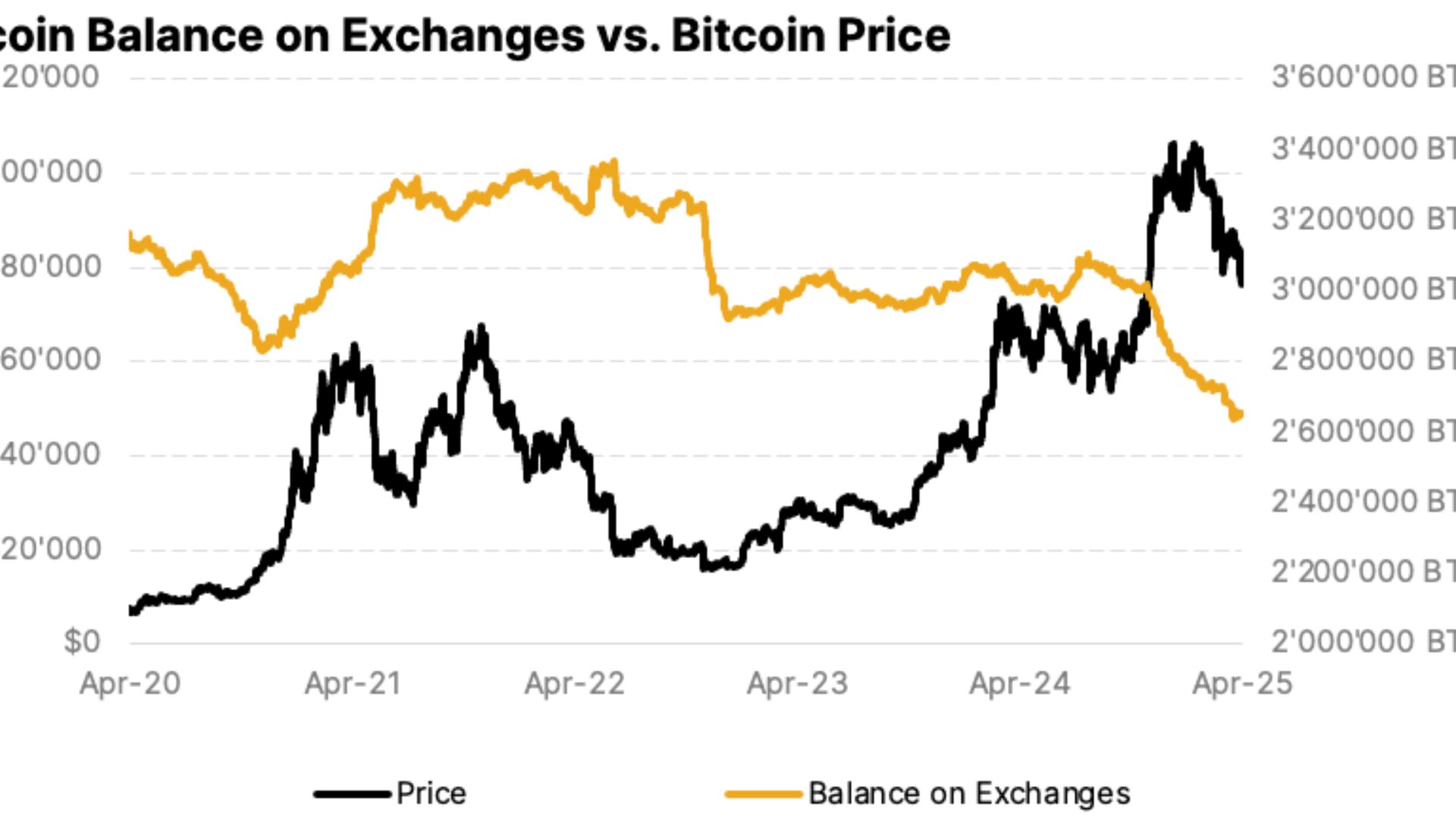
Despite the current stagnation, several developments could trigger a breakthrough at $64,300 and propel Bitcoin higher. Understanding these catalysts is important for investors deciding whether to increase cryptocurrency exposure or wait for clearer signals. Regulatory Clarity represents perhaps the most significant potential catalyst. Any major government announcement providing clear, positive regulatory frameworks for cryptocurrency could instantly change investor sentiment. Europe, the United States, and Asia are all developing crypto regulations, and favorable policy developments in any major economy could spark institutional investment and drive Bitcoin price higher.
Macroeconomic Shifts could also trigger a breakthrough. If inflation unexpectedly re-accelerates, interest rate expectations shift downward. Or economic growth concerns emerge, Bitcoin could suddenly look attractive again as an alternative asset. The flight-to-safety mentality that typically benefits gold could extend to Bitcoin if traditional markets face pressure. Adoption Developments in the corporate and institutional space remain powerful drivers. Major companies announcing Bitcoin treasury positions. Significant new payment integrations, or institutional investors (like pension funds or endowments) increasing cryptocurrency allocations could provide the catalyst needed to overcome technical resistance and drive sustained price appreciation.
Technical Breakout itself can be self-reinforcing. If Bitcoin finally breaks decisively above $64,300 with significant volume. This could trigger algorithmic buying, margin traders covering shorts, and momentum followers jumping aboard. A clean breakout followed by retesting of the resistance level as support would signal a genuine shift in sentiment. Market-Specific Events, such as the resolution of major legal cases involving cryptocurrency exchanges or platforms, could also move the needle. Any perceived reduction in systematic risk within the crypto ecosystem could encourage more conservative investors to increase their exposure.
Risk Factors and Potential Downside Scenarios
While much analysis focuses on potential upside catalysts, prudent investors must also consider downside risks and scenarios where Bitcoin could decline from current levels. Regulatory Crackdowns remain a genuine concern. If major governments implement restrictive crypto regulations, impose significant taxes on cryptocurrency transactions. Or create barriers to institutional adoption, Bitcoin could face severe headwinds. China’s historical role in shutting down crypto mining operations demonstrates how regulatory action can rapidly alter market dynamics.
Macroeconomic Deterioration could also pressure Bitcoin. If global stock markets begin to falter—perhaps due to slowing economic growth. Unexpected inflation reacceleration, or geopolitical tensions—investors might engage in broad portfolio deleveraging that includes cryptocurrency positions. Bitcoin is sometimes treated as a leveraged bet on risk appetite, meaning it could decline sharply during periods of risk-off sentiment. Competitive Pressures from other cryptocurrencies and blockchain technologies pose a subtle but real threat. As the crypto ecosystem matures. Alternative projects may offer innovations or use cases that attract capital away from Bitcoin. While Bitcoin remains the dominant cryptocurrency by market capitalization, this dominance is not guaranteed indefinitely.
Technical Breakdown below critical support levels could also trigger cascading selling. If Bitcoin fails to hold above $60,000 and breaks into the $55,000-$58,000 range, this could accelerate selling pressure and trigger margin calls among leveraged traders, pushing prices even lower. Understanding support levels is just as important as identifying resistance. Sentiment Shifts in the investor community can happen rapidly in cryptocurrency markets. If dominant market narratives change—such as the narrative about Bitcoin as “digital gold” losing appeal—sentiment can turn negative quickly. Overriding technical and fundamental considerations.
Strategic Considerations for Bitcoin Investors
Given the current market situation where Bitcoin is stuck below $64,300 while stocks hit records. Investors must carefully consider their strategic approach. Long-Term Investors with substantial time horizons (5+ years) might view the current consolidation as a buying opportunity. Particularly if they believe in the fundamental value proposition of Bitcoin and cryptocurrency adoption. Accumulating Bitcoin at lower prices could compound returns significantly over extended periods if the long-term bull case materializes. Active Traders should focus on technical levels. Volume patterns, and momentum indicators to identify entry and exit points. The current range-bound environment between support and resistance offers opportunities for range trading strategies. Though these require discipline and risk management.
Portfolio Allocators should consider Bitcoin’s role within a diversified portfolio. Even if Bitcoin underperforms stocks in the near term. Its low correlation with equities during certain periods provides diversification benefits. The appropriate Bitcoin allocation depends on individual risk tolerance. Investment horizon, and overall portfolio construction. Risk Management is paramount. The volatility of Bitcoin means that position sizing should be appropriate to overall portfolio risk tolerance. Investors should never allocate to Bitcoin more capital than they can afford to lose, given the speculative nature of cryptocurrency.
Patience may be the most valuable virtue in the current environment. Rather than forcing decisions in a confusing market setup where stocks are strong but Bitcoin is weak. Investors can afford to wait for clearer signals before making significant changes to their Bitcoin positioning.
Conclusion
The divergence between record-high global stock indices and Bitcoin’s struggle below $64,300 represents a fascinating moment in financial market history. This disconnect highlights the different factors driving traditional equities versus cryptocurrency. As well as the challenges Bitcoin faces in gaining sustained investment traction when alternative assets offer stronger near-term returns. Bitcoin price prediction remains inherently uncertain, but the technical resistance at $64,300. Combined with the macroeconomic headwinds and capital flows toward equities, suggests continued near-term consolidation is likely. However, the fundamentals supporting long-term Bitcoin adoption and value appreciation remain intact. Patient investors who believe in the long-term potential of cryptocurrency may view current price levels as an opportunity rather than a barrier.
The key is to avoid overreacting to near-term price action while remaining vigilant about catalysts that could shift market dynamics. Whether Bitcoin breaks through $64,300 or consolidates for an extended period. The journey toward becoming a truly mainstream asset class continues. Smart investors will stay informed, manage their risk appropriately, and maintain perspective on their longer-term financial objectives.
FAQs
Q . Why is Bitcoin stuck below $64,300 when stocks are hitting record highs?
Bitcoin is currently experiencing resistance at $64,300 due to a combination of technical factors (repeated rejection at this level), macroeconomic conditions (strong stock market performance reducing demand for alternative assets), and capital allocation dynamics. When traditional equities are performing well, investors have less motivation to seek refuge in cryptocurrency. Creating upward pressure on Bitcoin’s price. Additionally, monetary policy expectations and concerns about regulatory developments may be weighing on sentiment.
Q . What is the most likely price target for Bitcoin in the next 3-6 months?
Bitcoin price predictions vary significantly among analysts. Conservative forecasts suggest Bitcoin may remain range-bound between $60,000 and $65,000 for several months. More bullish analysts predict that Bitcoin could break through resistance and target $70,000-$85,000 if macroeconomic conditions remain stable and regulatory clarity improves. The actual outcome depends on multiple factors including macroeconomic data. Regulatory announcements, and broader market sentiment.
Q . Should I buy Bitcoin at current prices or wait for it to break through $64,300?
This depends on your investment timeframe and risk tolerance. Long-term investors who believe in Bitcoin’s fundamentals might view current prices as a buying opportunity. Particularly given strong long-term adoption trends. Active traders may prefer to wait for a decisive breakout above $64,300 with confirmed volume, as this
